
 Tensions remain high in Tunisia as the country awaits the announcement of a new national unity government.
Prime Minister Mohammed Ghannouchi has said an agreement between the political parties would be unveiled on Monday, following talks over the weekend.
Meanwhile, soldiers fought gunmen loyal to the ousted President, Zine al-Abidine Ben Ali, late into the night.
The country has been in a state of emergency since Mr Ben Ali fled amid widespread anti-government protests.
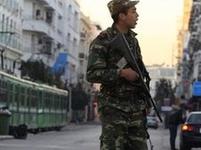
Soldiers backed by tanks are patrolling in Tunis and other cities in an attempt to restore order, while days of violence have cut off supplies to shops and petrol stations, causing shortages.
'Heavy gunfire'
Mr Ghannouchi - who was also prime minister during Mr Ben Ali's rule - has pledged rapid action to fill the power vacuum, after being asked to form a government by interim President Foued Mebazaa, the former speaker of the parliament.
"Tomorrow we will announce the new government which will open a new page in the history of Tunisia," Mr Ghannouchi said in a brief statement on Sunday.
Mr Ghannouchi has also pledged "zero tolerance" against anyone threatening the security of the country.
However the country remains volatile, and residents reported heavy gunfire at the Presidential Palace in Carthage, north of Tunis, late into the night. In the city, fighting also continued at the Interior ministry and the presidential residence.
Two gunmen firing from a roof near the interior ministry were reportedly shot dead by the security forces.
The clashes erupted after the arrest on Sunday of the former head of the presidential security force, Ali Seriati, who was accused of threatening state security by fomenting violence.
The BBC's Wyre Davies, in Tunis, says that while the Tunisian army does not appear to be interfering in the process of political reform, the motives of some members of the police and security services loyal to the ousted president may be more sinister.
Meanwhile, long queues have appeared at petrol stations and many people are complaining of food shortages caused by days of unrest.
"There are major food shortages. We don't have enough bread and flour. We risk a food crisis if this continues," one woman, Najla, told the Agence France-Presse news agency at the main market in Tunis.
On Sunday evening, some Tunis residents blocked roads with makeshift barriers of branches and bins, in an attempt to protect their homes from looters.
"We came out on the streets and dressed in white vests so we can identify one another. We told the police in the neighbourhood that we are here and we're dressed in white - it was during curfew hours... some brought sticks and we collected rocks," one man told Reuters.
'Wild boar hunting'
Earlier, people tore down the massive portraits of Mr Ben Ali, some of them several stories high, that hung from lamp-posts and billboards.
There have also been attacks targeting businesses and buildings connected with the former president and his family.
A French-German photographer from the EPA agency is in a "critical condition" after being hit in the head by a tear-gas canister on Friday, an official at the French consulate said.
The 32-year-old man, Lucas Mebrouk Dolega, was earlier reported to have died.
In another development, a group of Swedish nationals - who said they were in the country on a wild boar hunting trip - were attacked and badly beaten in Tunis after it is believed they were mistaken for a group of foreign mercenaries.
Mr Ben Ali, who had been in power for 23 years, fled to Saudi Arabia on Friday after a month of mounting protests across the country over unemployment, food price rises and corruption.
Under the present Tunisian constitution, a presidential election must be held within 60 days.