

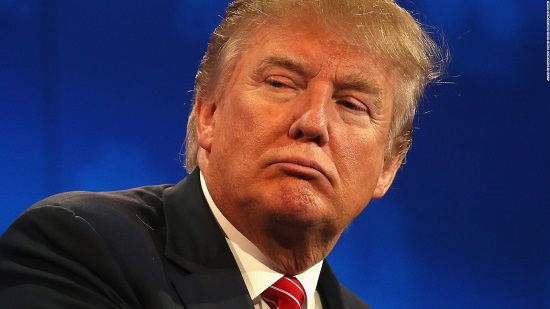
The president of the European Council warned Tuesday that President Trump was a potential threat to the European Union, including the American leader’s bellicose pronouncements with major geopolitical challenges like Russian aggression, China’s assertiveness and international terrorism.
In a letter sent to European leaders, Donald Tusk, the council president, wrote that those factors and “worrying declarations by the new American administration all make our future highly unpredictable.” He appeared to question whether the United States would maintain its commitment to European security under Mr. Trump’s leadership.
“For the first time in our history, in an increasingly multipolar external world, so many are becoming openly anti-European, or Eurosceptic at best,” Mr. Tusk wrote. The letter was released ahead of a European Union summit meeting in Malta on Friday; Mr. Tusk is responsible for setting the agenda for the meetings.
“Particularly the change in Washington puts the European Union in a difficult situation; with the new administration seeming to put into question the last 70 years of American foreign policy,” he wrote.
The European Union has been struggling to contend with fractious internal forces. Among them: the vote by Britain to leave the bloc, the organization’s failure to establish a unified response to the arrival of hundreds of thousands of asylum seekers and the debt crisis that has driven many Greeks into poverty. And then there are external pressures like Russia’s annexation of Crimea.
Before the election and since taking office, Mr. Trump has lauded the vote by Britain, known as Brexit, and said the country would thrive outside the European Union. He met with Nigel Farage, a populist leader of the campaign to leave the bloc, before seeing Prime Minister Theresa May. And at one point he went so far as to suggest that Mrs. May appoint Mr. Farage as Britain’s ambassador to the United States.
Mr. Trump has also praised President Vladimir V. Putin of Russia and indicated he would pursue friendlier relations with Moscow, even as Russia encourages chaos on the European Union’s eastern border.
Mr. Tusk’s letter does not reflect a new policy for the European Union, and member states of the 28-nation bloc are not required to act on Mr. Tusk’s advice when they meet on Friday. But many European leaders have made their differences with Mr. Trump known.
After the United States said it was temporarily blocking refugees from entering the country, Chancellor Angela Merkel of Germany felt compelled to point out to Mr. Trump the obligations of nations under the Geneva Conventions to protect refugees of war on humanitarian grounds. And President François Hollande of France said he had reminded Mr. Trump that “the ongoing fight to defend our democracy will be effective only if we sign up to respect to the founding principles and, in particular, the welcoming of refugees.”
Mrs. May, of Britain, sought in a meeting with Mr. Trump last week to confirm his commitment to NATO; he was dismissive of the alliance, the bedrock of European security, during his campaign.
Now, the sentiments expressed in Mr. Tusk’s letter are pushing European leaders’ exasperation with the American president further into the public view.