During the previous decade, Arab countries faced a number of big challenges, some of which have evolved into threats challenging governments, institutions, and people.
After revolting twice against their rulers in less than five years, Egyptians are now longing for the era of Hosni Mubarak. They long for when the economy was substantially better, security was functioning and the country was more politically stable. After decades of suffering and after paying a high price for their two “revolutionsâ€, Egyptians believe that they deserve a better life. Yet, they need to understand that only if the country is placed on the right path will this goal be achieved.
Calm seems to have prevailed in the currency market in the past few days following the Central Bank's recent decision to devalue the Egyptian Pound against the US Dollar by around 15%.
According to a Thomson Reuters Foundation 2013 survey, Egyptian women fare the worst amongst the 22 Arab states. The survey based its findings on a surge in sexual harassment, high rates of female genital mutilation (FGM), and the rise in violence after Egypt's revolutions.
The most recent European Union resolution has effectively condemned Egyptian security forces for the murder of Italian PhD student, Giulio Regeni. The young Cambridge scholar was forcibly disappeared and killed while conducting research on independent trade unions in Egypt. Despite signs of torture, including pulled nails and cigarette burns on his body, Egyptian officials claimed it was a roadside accident. The EU resolution is non-binding, meaning that European governments may continue to support more human rights abuses if they choose, since the recommendations may not be enforced.
Contrary to what some claimed would happen, the value of the dollar has not dropped. It has continued to climb, as reported on various news websites with sensational headlines such as “Another leap for the dollar†or “The pound continues to bleed.â€
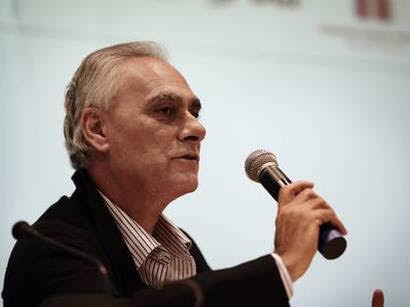
I have little sympathy, political or otherwise, for Tawfiq Okasha, television personality and until a few days ago, Member of Parliament.
Despite the change in political leadership in Egypt from 2011 until now, none of the different administrations that assumed office were able to arrive at a successful strategy to handle Ultras movements. Courses of action adopted by the different political administrations included attempted dialogues, cooptation, legislation, and outright violence. However, until today the state remains unable to repress the movements or accommodate them.
Corruption is the buzzword today. Everyone worldwide is talking about corruption. By definition, corruption is generally known as “dishonest or fraudulent conduct by those in power, typically involving briberyâ€. It also refers to bribery or kickback. Transparency International, the anti-corruption watchdog, defines corruption as “the abuse of power for private gainsâ€. Transparency International explains that corruption has a wider scope than bribery, which is frequently believed to be synonymous with corruption associated with government officials.
Egypt is set to explode. When and how is dependent on who pulls the trigger and why. Those who had the opportunity to peruse the previous article came to quickly understand that Egypt has galloped to a 3, on a danger scale of 1-5, in 2.5 years of de jure Al-Sisi rule. A combination of human rights abuses, security failure, and economic failures have each contributed to increasing pressure on a regime that history may judge as, potentially, the most brutal in modern Egyptian history.
Egypt seeks to move the economic growth process forward with every means possible, whether through local or Arab or foreign investment. This growth is the way to raise standards of life, create jobs and enable people to earn their living by themselves with dignity. If economic growth is accompanied with social justice it is easy to consolidate political and security stability, which is based on social consent not on an authoritarian grip.
It was recently announced that Egypt would receive a loan from the World Bank amounting to $3 billion, a third of which has already been delivered.
The Kerdasa Massacre, August 2013. Fifty militants storm the police station, killing 14 policemen. Graphic visuals of dead and mutilated bodies splashed all over traditional Egyptian news outlets and online platforms.
In an extraordinary meeting of the Doctors’ Syndicate General Assembly, an unprecedented 10,000 doctors gathered from all around the country to defend the dignity of medical professionals, which is synonymous with the dignity of Egypt. Behind them stood masses of Egyptians from different professional syndicates, along with average citizens, to express both their solidarity with the doctors and outrage at the Minister of Interior's hostility.
Saudi Arabia is confronting a perfect storm of challenges: economic, political, social, ideological, and geopolitical. How it weathers the storm will likely depend on how it handles the inevitable restructuring of the problematic partnership between the Al Saud ruling family and the Wahhabi ulama or religious scholars, on whom the former rely for their legitimacy.
I listened to President Abdel Fattah Al-Sisi’s speech and I found myself wondering how Egyptians will react to his call to donate a pound every morning to collect a total of EGP 4bn in a year via text messages. I became more concerned with the spread of upbeat emotional statements through various media and social networking sites that have inflated the initiative, saying it will bring billions and fix the inherited economic problems.
Authoritarianism makes for bad journalism — often, very bad journalism. The truism is self-evident and more than amply demonstrated by lived experience, not only in Egypt but everywhere in the world.
I don’t think I can say anything about the late Mohammed Hassanein Heikal’s work in journalism, politics, or the public sphere that hasn’t already been said by his friends, colleagues, and students who had the chance to work closely with him throughout his decades-long journey. But I would like to share two of my experiences with him, one personal and one political.
Italian researcher Giulio Regeni was killed in a tragic, horrific and shocking way to any human conscience. The Italian people deserve from Egypt and its hospitable people the warmest condolences for the painful and saddening death. This incident came at a time when Egyptian-Italian relations are flourishing, especially in light of similar, or identical, stances on several regional and international issues, as well as mutual cooperation between the two countries.
By the fifth anniversary of the 25 January Revolution, the conspiracy theory had become a mainstream way for many to understand the uprising as well as its causes and repercussions. In the beginning, talk of conspiracy was untenable and weak and sometimes merely a joke, but it gained momentum and more advocates have since developed mechanisms, channels, and stories to promote the theory. Today, it has become a version that competes with the events of the revolution that are still fresh in our minds.
I met Maya Morsi, who was selected as the chairwoman of the National Council for Women this month, many years ago when she was working at UN Women. She is a young Egyptian mother, an expert on women's affairs and one of the best public policy experts on social gender in Egypt, and perhaps even in all of the Arab world.
Others
First, I offer my sincere condolences to the martyrs who shed their pure blood as a result of the vicious terrorist act that targeted the Petrine Church in Cairo.